Browse the knowledgebase
Category: Market & Industry Insights
Analysis of India’s legaltech market, court data infrastructure, venture capital flows, and the evolving landscape of legal technology. For VCs, analysts, journalists, enterprise buyers, and operators.
-

Consumer Court Case Status on eCourtsIndia: Search Every Consumer Forum, NCDRC, State and District Commission
Check consumer court case status on eCourtsIndia across NCDRC, State and District Commissions. Search by company, complainant, CNR or state, free.
-

TDSAT and APTEL Case Status on eCourtsIndia: Search Every Telecom, Broadcasting and Electricity Appeal
Search TDSAT and APTEL case status on eCourtsIndia across every telecom, broadcasting and electricity appeal. Find any matter by party name, CNR or case type.
-

DRT and DRAT Case Status on eCourtsIndia: Search Every Debt Recovery Tribunal
Search DRT and DRAT case status on eCourtsIndia across all 39 Debt Recovery Tribunals and 5 appellate tribunals. Find any recovery or SARFAESI matter by bank,…
-

SAT Case Status on eCourtsIndia: Search Every Securities Appellate Tribunal Appeal
Search SAT case status on eCourtsIndia across all three Securities Appellate Tribunal streams, the SEBI, IRDAI and PFRDA appeals. Find any appeal by name, CNR or…
-

ITAT and CESTAT Case Status on eCourtsIndia: Search Every Tax Tribunal Bench
Search ITAT and CESTAT case status on eCourtsIndia, with 30 ITAT bench locations indexed and the live CESTAT zones. Find any tax appeal by name, CNR…
-
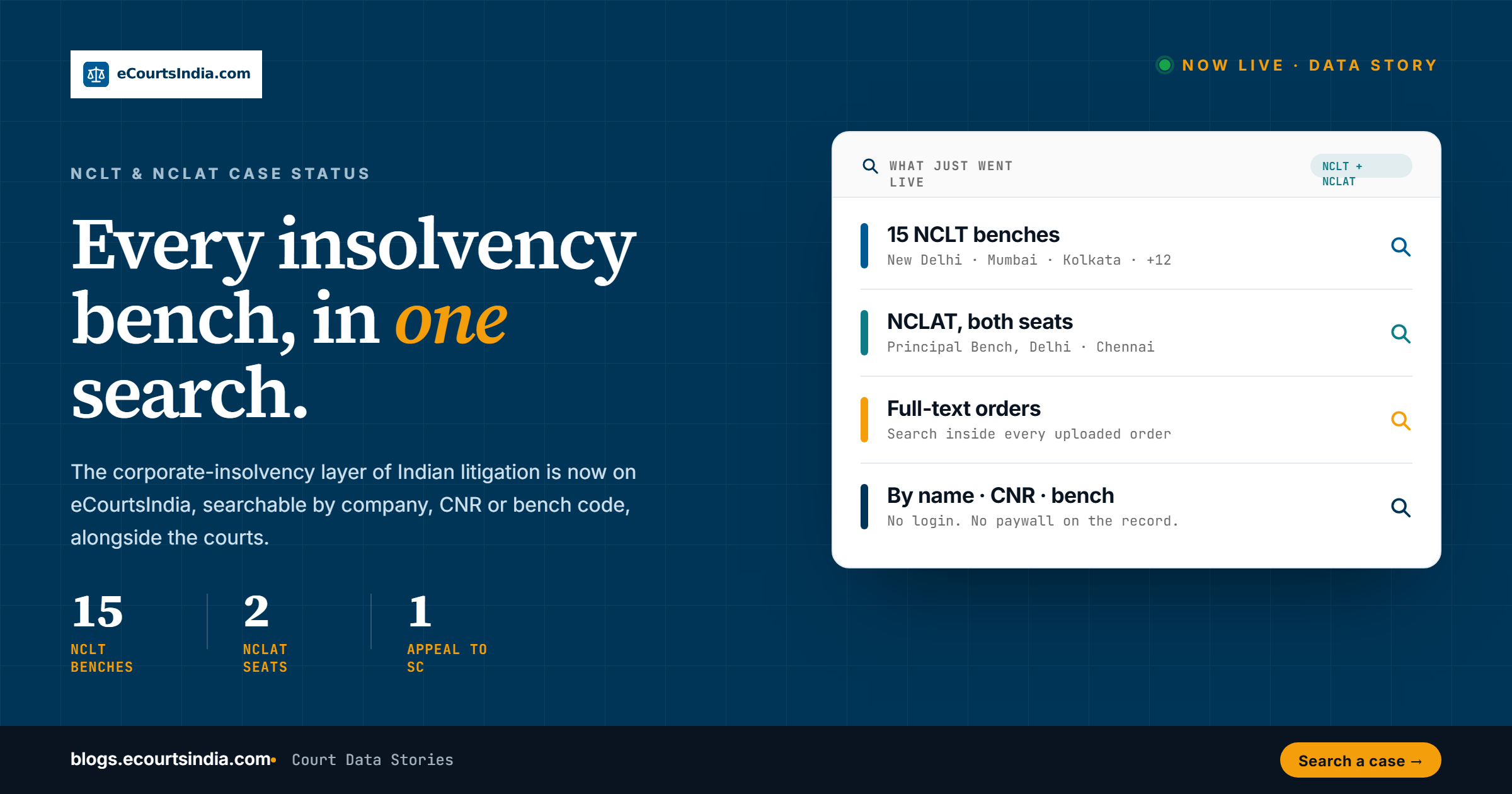
NCLT and NCLAT Case Status on eCourtsIndia: Search Every Insolvency Bench
Search NCLT and NCLAT case status on eCourtsIndia across all 15 insolvency benches. Find any company petition or IBC matter by company name, CNR or bench.
-

Why the AI Lawyer Will Be Built in India, Not Imported From the United States
Harvey and Legora cannot build for India because the data, the procedure, the languages and the price points all sit in India. The Indian AI Lawyer…
-
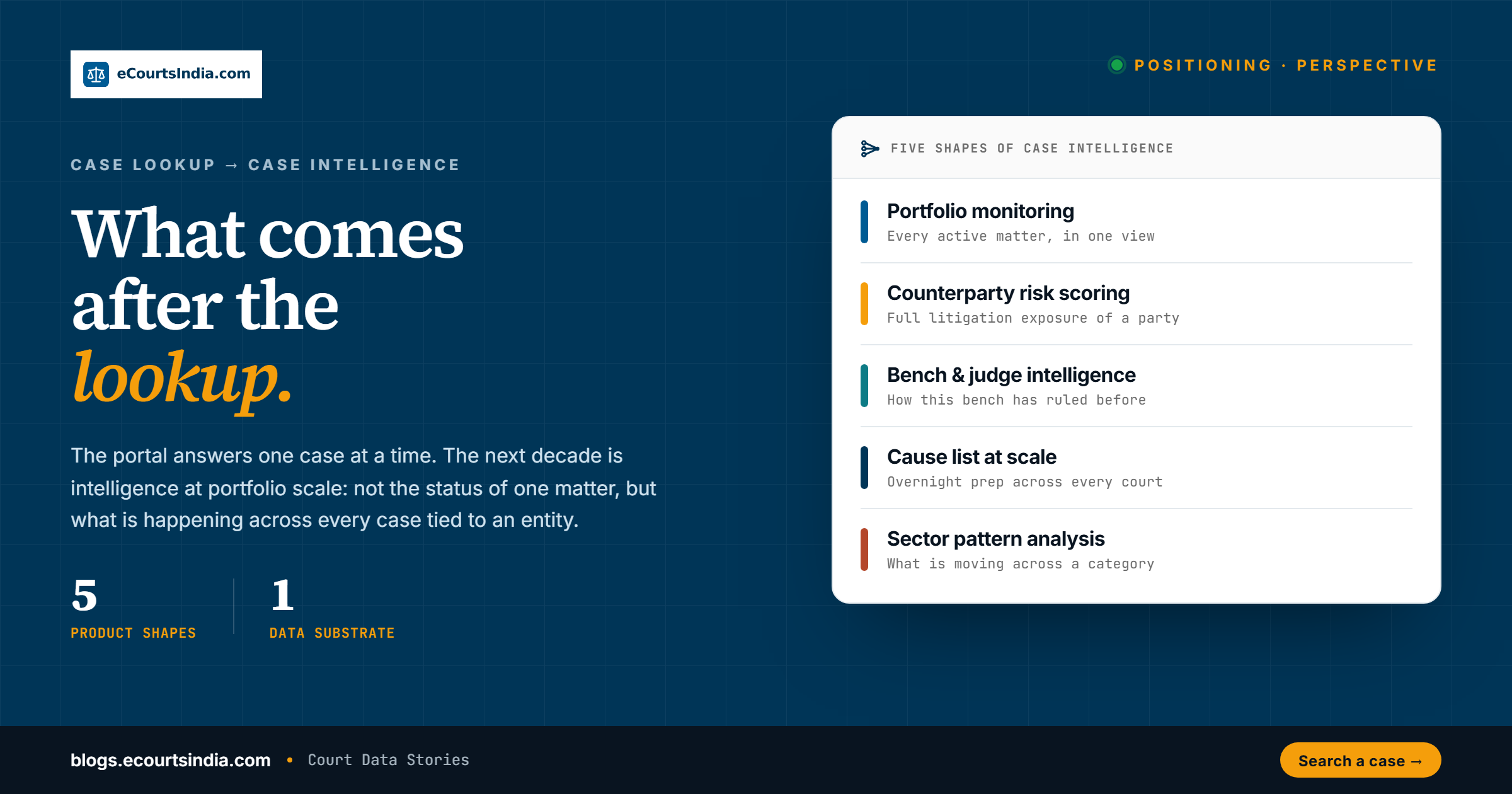
From Case Lookup to Case Intelligence: What Comes After the Government Portal
The Indian court portal answers one-case lookup at a time. That is the right design for a public records system. The next decade is about case…
-

The Bar Is Seventeen Lakh People. Here Is What That Buyer Pool Actually Looks Like.
About 20 lakh enrolled and an estimated 17 lakh practising per Bar Council of India, 80 to 90 percent at the district tier, 80 percent working…
-
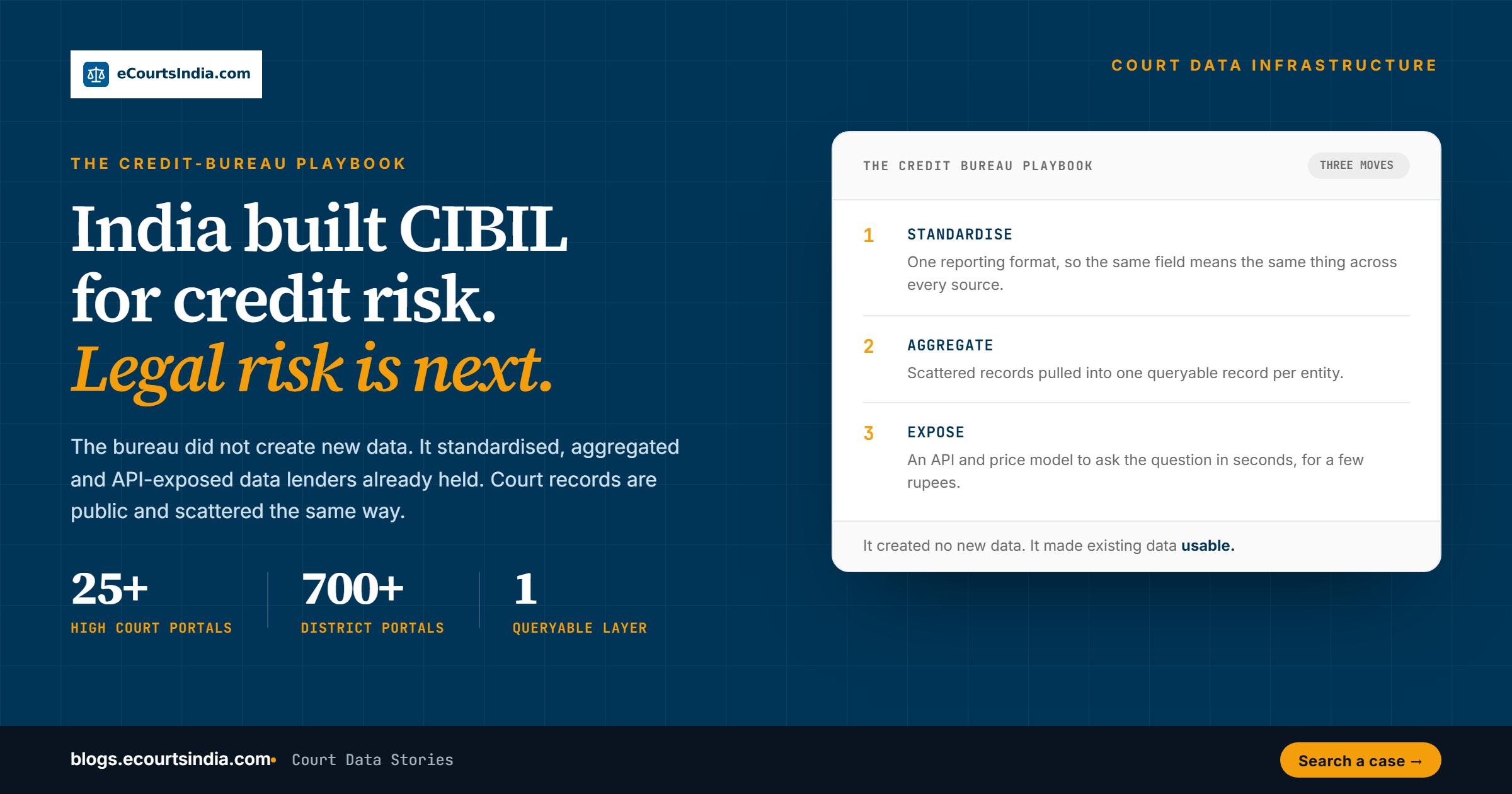
Why India Needs a CIBIL for Litigation
CIBIL solved India’s credit history problem by standardising, aggregating and API exposing existing lender data. The same shape is overdue for legal and regulatory risk. The…