Browse the knowledgebase
Tag: BGV
Background verification and court-record screening
-
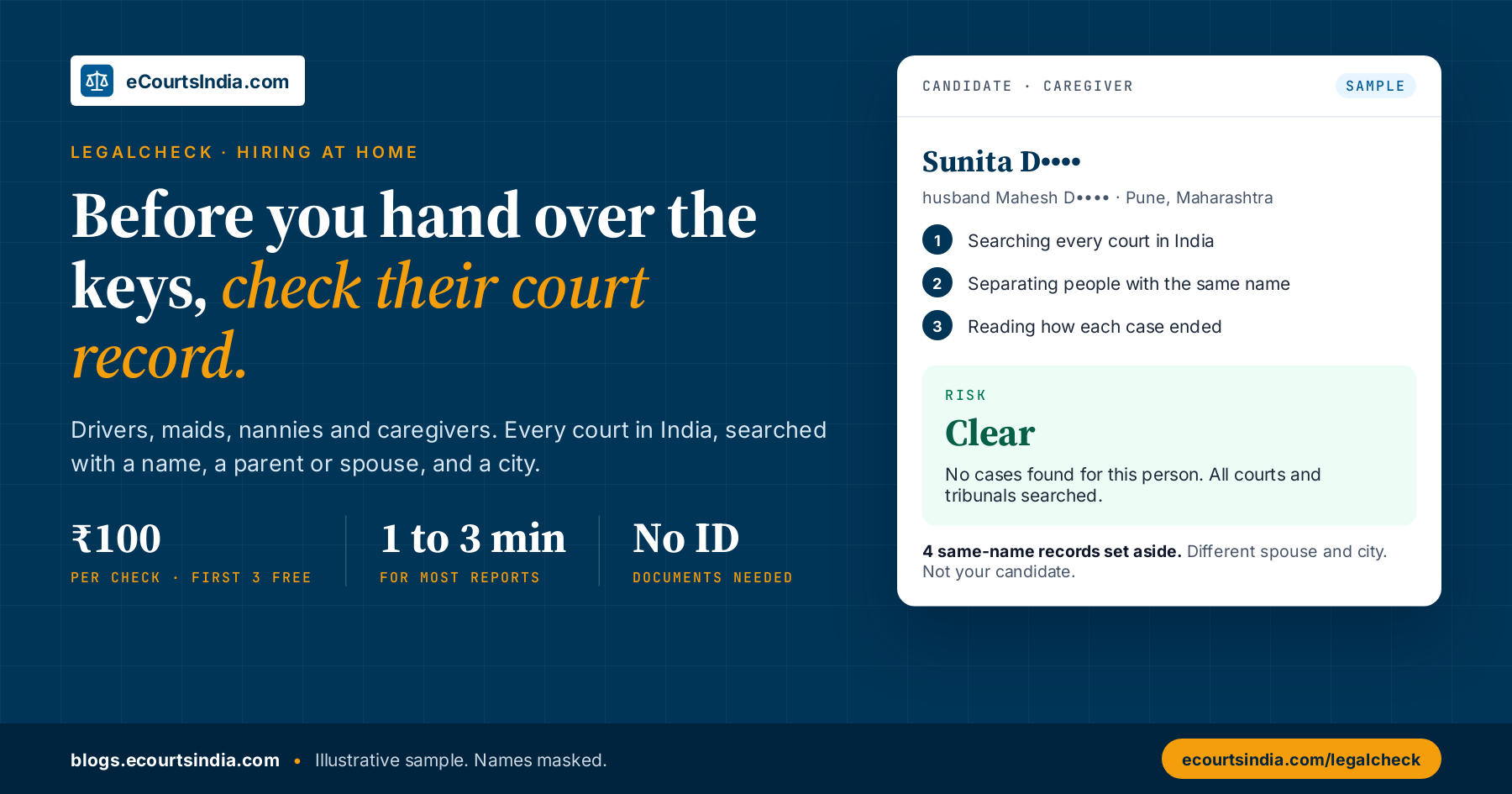
Hiring a Driver, Maid or Caregiver in India? Run a Court Record Check First
Hiring a driver, maid, nanny or caregiver? Run a court record check, then police verification. What each shows, a safe-hiring checklist and real cases.
-
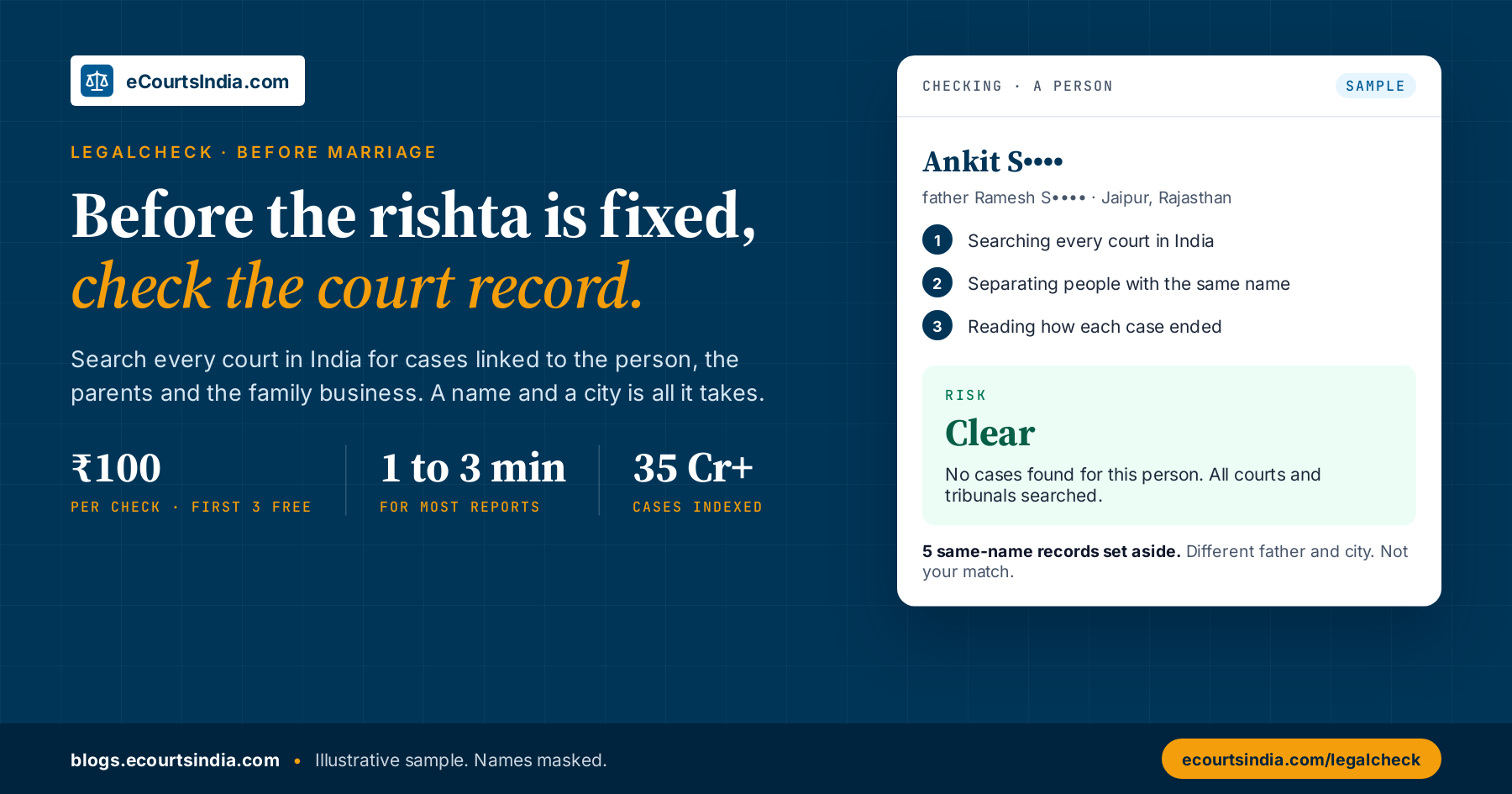
Background Check Before Marriage in India: What Court Records Reveal
Before the rishta is fixed, check court records on the partner, parents and family business. What a pre-marriage check shows, misses, and how to ask.
-
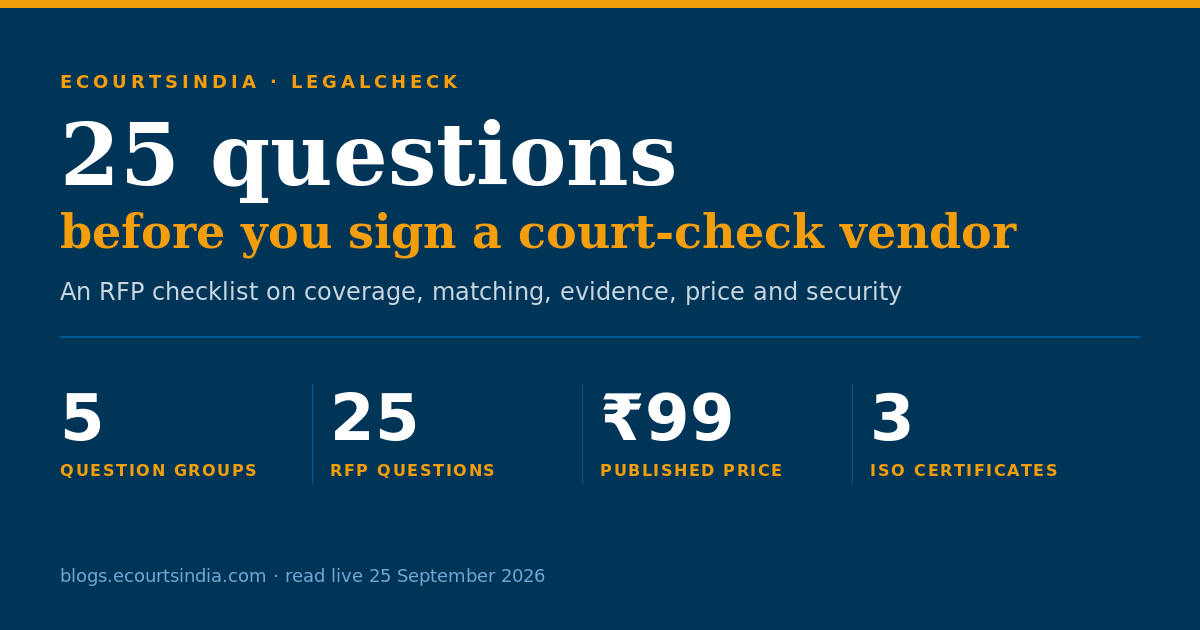
How to Choose a Court-Record Check Vendor in India: 25 Questions for Your RFP
25 RFP questions for choosing a court-record check or BGV vendor in India: coverage, identity matching, evidence, price, data security and compliance.
-

Same Name, Wrong Person: Namesakes in Indian Court Record Checks
Common Indian names return lakhs of court records. See why a name match is not an identity, and how to read confirmed, probable and excluded results.
-

Court Record Check vs Police Verification vs FIR Search vs PCC: Which One Do You Need?
Court record check, FIR search, police verification and PCC read four different records. What each shows, who issues it, and which one you need.
-
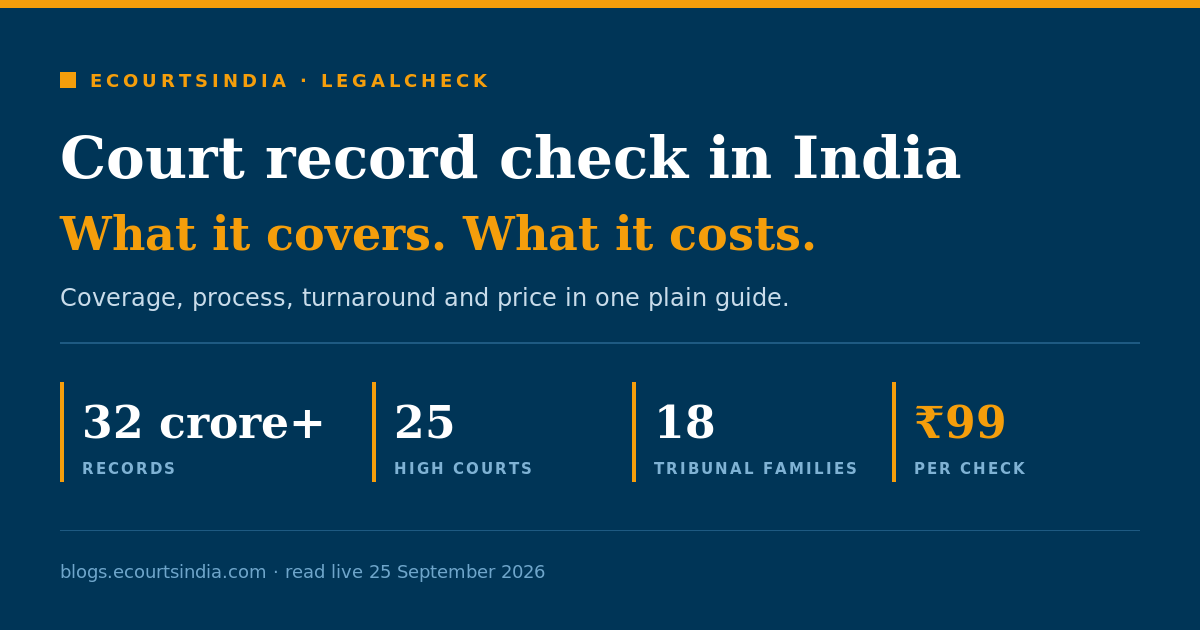
Court Record Check in India: What It Covers, How It Works, and What It Costs
What a court record check in India covers, the five steps from search to identity match, turnaround, cost, and how to read pending and disposed cases.
-
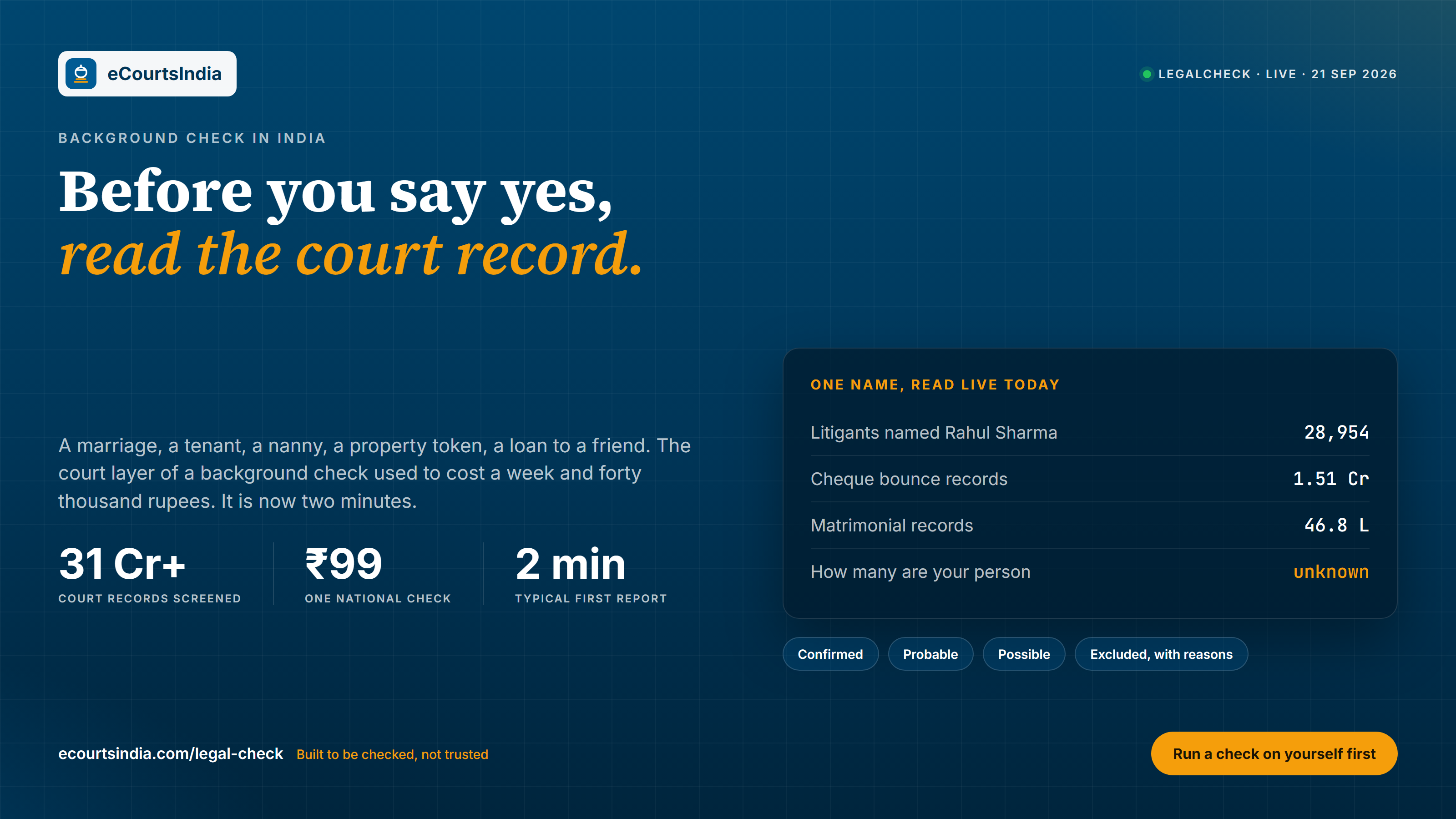
Background Check in India: How to Check Court Cases Against Anyone
How to check court cases against a person or company in India before a marriage, tenancy, hire, loan or deal. Free name search, LegalCheck and limits.
-

Court Record Check API India: LegalCheck Developer Guide
LegalCheck court record check API for India: endpoints, the legal-check.v1 report, sample code, ₹99 per check pricing, error codes and a vendor field map.
-
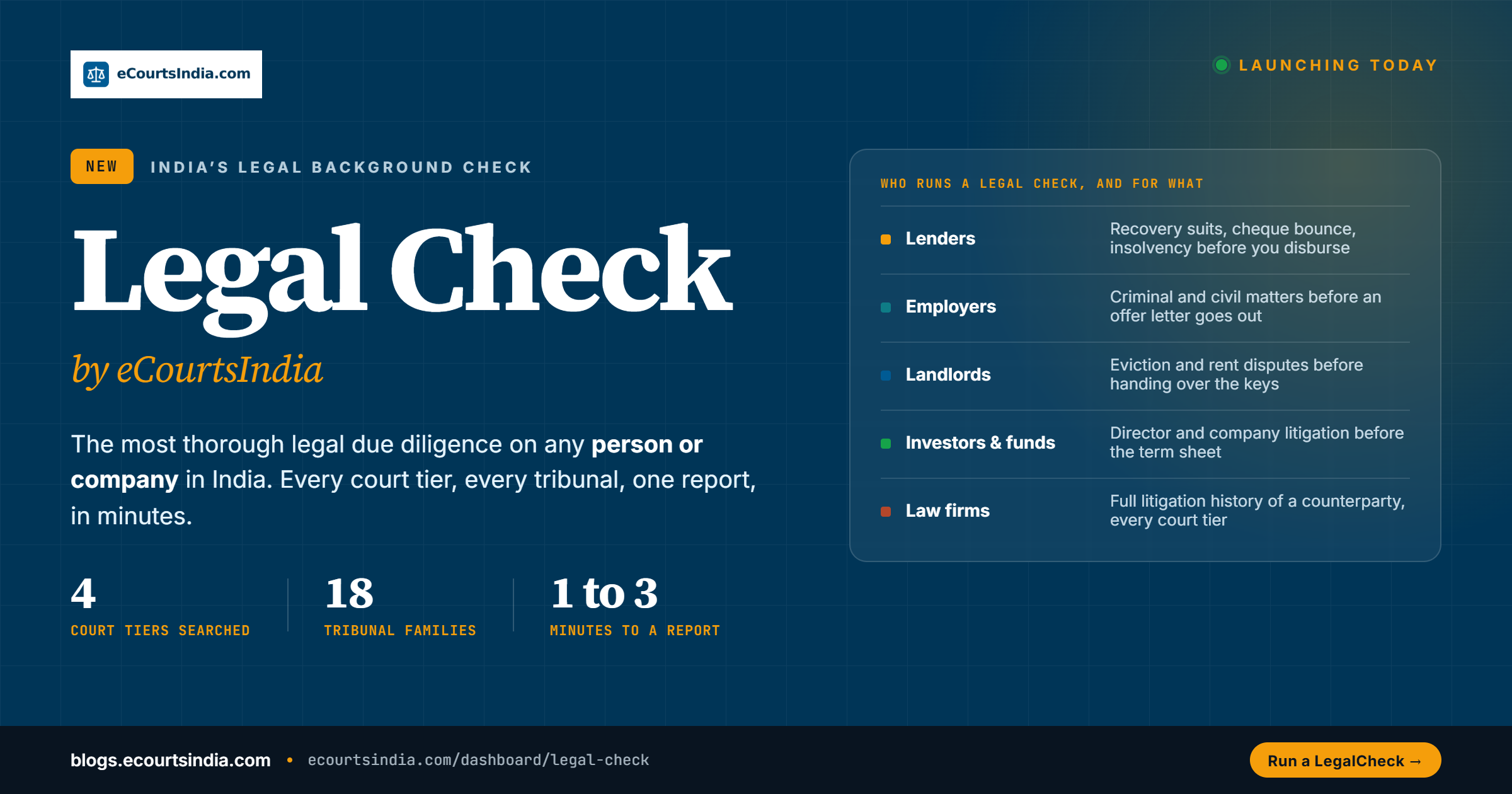
LegalCheck: India’s Identity-First Legal Background Check
LegalCheck screens a person or company against 30 crore+ Indian court records, keeps namesakes out, and links every finding to the case. How it works.